
Industrial Flooring Systems
High-Performance Resin Flooring Solutions by Almasi Surfaces
Almasi Surfaces specializes in advanced industrial flooring systems engineered for durability, hygiene, safety, and long-term operational performance. Our flooring solutions are designed to withstand heavy industrial movement, chemical exposure, abrasion, thermal stress, moisture, and demanding operational conditions while maintaining a seamless and professional finish.
From warehouses and manufacturing facilities to pharmaceutical plants, food processing units, commercial interiors, cleanrooms, and heavy-duty industrial environments - our flooring systems are tailored to meet the operational and aesthetic requirements of modern industries.
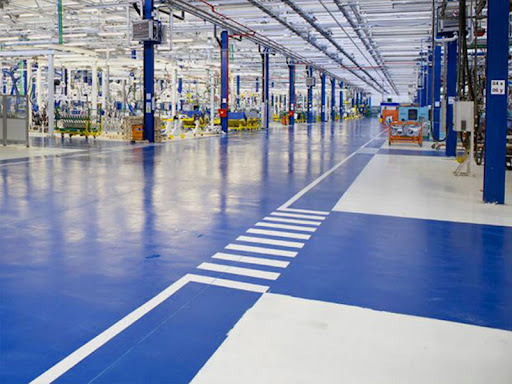
Epoxy Flooring Systems
Epoxy flooring systems provide seamless, durable, and easy-to-maintain surfaces with excellent adhesion and industrial-grade performance. These systems are ideal for environments requiring abrasion resistance, cleanability, aesthetics, and operational efficiency.
1. Self-Levelling Epoxy Flooring
Smooth, seamless & glossy flooring systems designed to provide hygienic, dust-free & easy-to-clean industrial surfaces with excellent durability.
-
Warehouses & logistics centres
-
Manufacturing facilities
-
Pharmaceutical production areas
-
Engineering workshops
-
Cleanrooms & laboratories
-
Production & assembly zones
-
Seamless glossy finish
-
Excellent cleanability
-
High abrasion resistance
-
Dust-free surface
-
Strong substrate adhesion
-
Easy maintenance
2. Granular / Textured Epoxy Flooring
Textured epoxy flooring systems designed to improve slip resistance, operational safety, and durability in industrial and commercial environments.
-
Walkways & utility areas
-
Food preparation zones
-
Commercial spaces
-
Industrial interiors
-
Loading & operational areas
-
Anti-slip textured finish
-
Improved workplace safety
-
Durable industrial surface
-
Good wear resistance
-
Suitable for medium to heavy traffic
3. Heat Resistant Epoxy Flooring
Specialized epoxy flooring systems designed for industrial areas exposed to elevated temperatures and demanding thermal conditions.
-
Process industries
-
Utility areas
-
Maintenance workshops
-
Heat-exposed operational zones
-
Improved thermal resistance
-
Durable industrial performance
-
Resistant to operational wear
-
Suitable for process environments
4. UV Resistant Epoxy Flooring
Modified epoxy flooring systems developed for semi-outdoor and UV-exposed areas where colour stability and long-term surface protection are important.
-
Semi-outdoor industrial areas
-
External covered zones
-
Service & maintenance areas
-
Utility spaces
-
Improved UV stability
-
Better colour retention
-
Durable protective finish
-
Suitable for exposed environments
5. ESD Flooring Systems
Electrostatic Dissipative (ESD) flooring systems designed to safely control and dissipate static electricity in sensitive industrial environments.
-
Electronics manufacturing
-
Pharmaceutical facilities
-
Laboratories
-
Sensitive equipment areas
-
Cleanroom environments
-
Static control protection
-
Seamless hygienic surface
-
Safe electrostatic discharge
-
Suitable for controlled environments
6. Terrazzo Flooring (Decorative)
Decorative heavy-duty flooring systems combining premium aesthetics with industrial durability and long service life.
-
Lobby & reception areas
-
Commercial interiors
-
Showrooms
-
Premium industrial facilities
-
Heavy-duty warehouse zones
-
Decorative premium finish
-
Excellent durability
-
Heavy load resistance
-
Seamless elegant appearance
-
Long-term performance
Importance of Surface Preparation
The long-term performance, durability, and adhesion of any industrial flooring system depends heavily on correct substrate preparation and professional installation practices. Proper surface preparation ensures strong bonding between the flooring system and the concrete substrate while minimizing the risk of premature failure, delamination, cracking, or surface defects.
At Almasi Surfaces, every project begins with a detailed substrate assessment to ensure the flooring system performs reliably under actual operating conditions.
Surface Preparation for Epoxy Flooring Systems
1. Concrete Assessment: Concrete substrates must be structurally sound, levelled, dry, and free from contamination before flooring installation begins. Existing defects, weak concrete, laitance, oil contamination, or surface irregularities must be properly treated prior to application.
2. Mechanical Surface Preparation: Mechanical preparation methods such as diamond grinding, scarifying, or shot blasting are used to create the correct surface profile for strong epoxy adhesion.
3. Moisture Evaluation: Substrate moisture levels are carefully evaluated before installation. Excessive moisture within concrete can affect adhesion and long-term flooring performance.
4. Priming Systems: Specialized primer systems are applied to improve substrate bonding, surface sealing, and overall flooring stability before the installation of epoxy layers.
5. Build-Up & Finishing Layers: Depending on the selected epoxy system and operational requirements, multiple layers may be installed to achieve the desired thickness, finish, durability, slip resistance, and chemical performance.
Why Proper Surface Preparation Matters
Correct surface preparation helps ensure:
-
Strong and reliable flooring adhesion
-
Improved long-term durability
-
Better resistance to impact and wear
-
Reduced risk of delamination or peeling
-
Improved chemical and moisture resistance
-
Better surface finish and aesthetics
-
Enhanced operational reliability
-
Lower long-term maintenance requirements
Even the highest quality flooring systems can underperform if the substrate is not properly prepared. Professional installation practices and correct system selection are critical to achieving reliable and long-lasting industrial flooring performance.